Lake Havasu Fishing Report – September 1
September 21, 2025 Lake Havasu City 20 photos
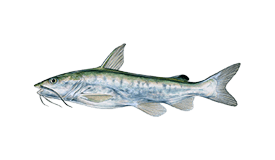
Catfish
Katvis
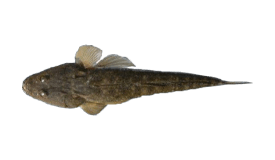
Flathead
Platkopvis
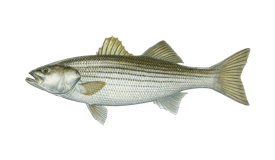
Bass (Striped)
Gestreepte Zeebaars
Sunfish
Sunfish

Trip Summary

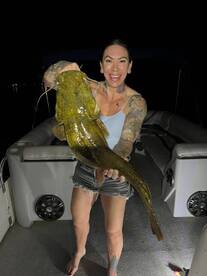
We had several charters this past weekend, and instead of the usual play-by-play, I’ll break things down by location and species since it was a true multi-species weekend. A strong pressure system moved through on Thursday, bringing a heavy storm that lasted most of the day. This dropped surface temps to 79–80°F by Friday and dirtied up parts of the lake, which slowed the bite somewhat, but we still managed solid numbers and good action. Mesquite Bay: Plenty of fish in 20–25 feet of water. Most have been smaller “dinks,” though the occasional 2-pounder showed up. Large amounts of bait marked throughout the area. Sod Farm (North Side of the Island): Large schools of stripers holding in 35–50 feet. The upper water column is loaded with 12–14" fish, but if you work below them, there are solid stripers in the 15–19" range. Best bite has been mid-morning and again in the late afternoon. Bait has been a little thinner here, but still enough to keep fish around. Thompson Bay: Lots of activity here. Tons of baitfish and strong marks on sonar. We boated plenty of 16–18" stripers just off the no-wake buoy line in 30+ feet of water, with fly-lined anchovies and jigs being most productive. Pilot Rock – Standard Wash: Fewer striped bass schools but massive balls of baitfish everywhere. Trolling in 30–50 feet produced better quality fish in the 2 lb range. Havasu Springs: Loaded with bait and stripers, with some impressive late-afternoon boils starting to form. This spot is shaping up to be excellent as the fall pattern sets in. Striper Recap: Trolling has been slower overall but still producing quality fish. Anchoring up, heavy chumming, and either free-lining cut anchovies on small circle hooks or working jigging spoons paired with a wounded minnow fly on a dropper loop about 14" above has been the ticket. Anchovies are key right now—don’t be shy with the chum. Our total for the weekend was 83 stripers released and 2 kept. Catfish: We ran a catfish trip Friday night down on the south end. Bait fishing was solid with tons of sunfish caught, plus a few surprise largemouth bass and a channel cat while targeting bait. The evening bite was a little tough with the lingering pressure system, but action was steady. We landed a nice flathead and a solid channel cat, and both were safely released after a great fight. Overall, a productive night with quality fish despite lower numbers. Fishing is transitioning as temps cool, and things should continue improving as we move into fall.
Kenneth Probst
Lake-havasu-city, Arizona, United States
Capt.Kenne Charters – Lake Havasu thumbnail
Welcome to Capt. Kenne Charters, based in beautiful Lake Havasu City! Book your next fishing adventure with us and discover what makes these waters so special. With Captain Kenneth at the helm, you'll benefit from years of knowledge and experience as...
Other reports from this charter

Jan 12- Feb 6th Lake Havasu Fishing Repo
Februari 6, 2026
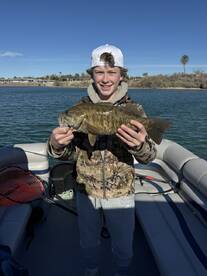
Lake Havasu continues to fish like winter, with water temperatures holding steady in the mid-50s and days slowly starting to get longer. While conditions haven’t changed drastically temperature-wise, the biggest shift over the last few weeks has been in how we’re targeting stripers. We’ve started throwing the cast net for shad and incorporating live bait into the program, which has made a big difference on certain days. My live shad setup has been simple and effective: 30 lb braid to a 24-inch 15 lb fluorocarbon leader, rigged with a small circle hook and as little weight as possible depending on the depth the fish are holding. Boils are still popping up periodically, and when they do, it’s been game on. During those moments, I’m still throwing Rapala CrushCity swimbaits on a 1 oz jig head. In several of the same coves where stripers have pushed shad shallow, we’ve also caught a surprising number of both smallmouth and largemouth bass mixed in with the stripers, all feeding aggressively on the same baitfish. Fishing over this stretch has been a true mix of highs and lows. The good days have been unforgettable, with fast action and aggressive fish that make winter fishing worth every cold morning. On the flip side, the tough days have been grind-it-out kind of days. Even when you’re marking shad and stripers stacked together, it doesn’t always mean the bite is on, which is just part of winter fishing on Havasu. I only have a few open dates left for February
Continue reading
Lake Havasu Fishing Report – January 1st
Januari 12, 2026
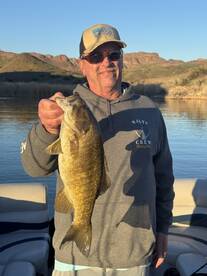
Lake Havasu has officially shifted into winter fishing mode, with sunrise now around 7:45 AM and the sun setting close to 5:45 PM. The weather has been all over the place, with wind, more wind, and even a little rain mixed in, but that’s been great news for the lake. All of that weather has pushed water temperatures down into the mid-50s, which is exactly where striped bass thrive this time of year. This temperature range is a sweet spot for stripers because it allows them to feed aggressively without burning too much energy, while shad also group up tightly in the cooler, oxygen-rich water, making them easier to hunt. The biggest change over the last couple of weeks has been the consistency of striper boils on the north end of the lake. I honestly haven’t had much reason to run south because the action up north has been that good. Find the birds and you’ll find the stripers. The boils have been lasting most of the day instead of just short windows, and some of our best fishing has happened on windy days. We’ve also been seeing better quality fish, with stripers regularly ranging from 2 to 6 pounds, and most of them are fat and full of shad. To stay on these roaming schools, I’ve adjusted my trolling program to match the conditions. When the birds are working, I’m typically running one of three lures: a ¾-ounce Cotton Cordell silver jig with a feathered treble hook, a white Fluke on a ¼-ounce Pulse jig head, or a Rapala CrushCity Mayor swimbait in shad color on a ¾-ounce Dobyns extra-long shank jig head. I’m pulling these baits on leadcore line, usually letting out three to four colors, and trolling between 2.5 and 3 miles per hour to keep the lures right in the strike zone. We even wrapped up one charter recently by throwing those Rapala CrushCity swimbaits up shallow after the stripers pushed shad into tight water and pinned them for an all-out feeding frenzy. It was a bad day to be a shad. If you want to experience this winter striper bite while it’s peaking shoot me a message
Continue reading
Lake Havasu Fishing Report – December 1–
December 17, 2025
Water temperatures are now hovering around 59–60° in the early mornings, warming to roughly 62° by the afternoon thanks to light winds and above-average air temps. The lake is still in the process of turning over, especially in the backs of coves and bays, but overall water clarity has noticeably improved compared to earlier in the fall. Each week it’s getting a little cleaner, and that’s helping the bite. Bird activity has been hit or miss, so I’ve been starting every charter with a clean slate and letting conditions dictate the game plan. I spend a lot of time glassing the water and watching bird behavior. You don’t always need birds actively diving or circling to know shad are present. Pay attention to birds sitting on the water or stacked along the shoreline—especially when multiple species of waterfowl are grouped together. They aren’t there by accident; they’re feeding, and where there’s shad, stripers are usually close behind. So what’s been working? Trolling has been a strong starting point. I’ve been running 4" River2Sea D-Walker 100 paddle tails in pearl on 1 oz jig heads, along with white Zoom Super Flukes rigged on ¼ oz albino Pulse jig heads. Nearly every trip starts with trolling proven water from the previous few days. This allows us to cover ground and locate active schools. Stripers are a pelagic species—they don’t live tight to structure. They roam open water, and right now food is the main driver. Water temps are fair, spawning isn’t a factor, so locating bait is everything. When I troll through a school—especially one holding close to shad—I mark it on the graph. If we hook up, we’ll either circle back and work that mark with flutter jigs or continue trolling through the school, depending on conditions. What I’ve noticed is that a school is usually either fully active and feeding or completely shut down while digesting. If trolling and jigging don’t produce, I’ll drop anchovies straight down. If that still doesn’t trigger bites, we move on and find a more active group of fish. Overall, fishing has been steady, and with improving clarity and cooling temps, things should continue to trend in the right direction. If you’re looking to get on the water, December is filling up fast, so give me a call or text to book your trip.
Continue reading